
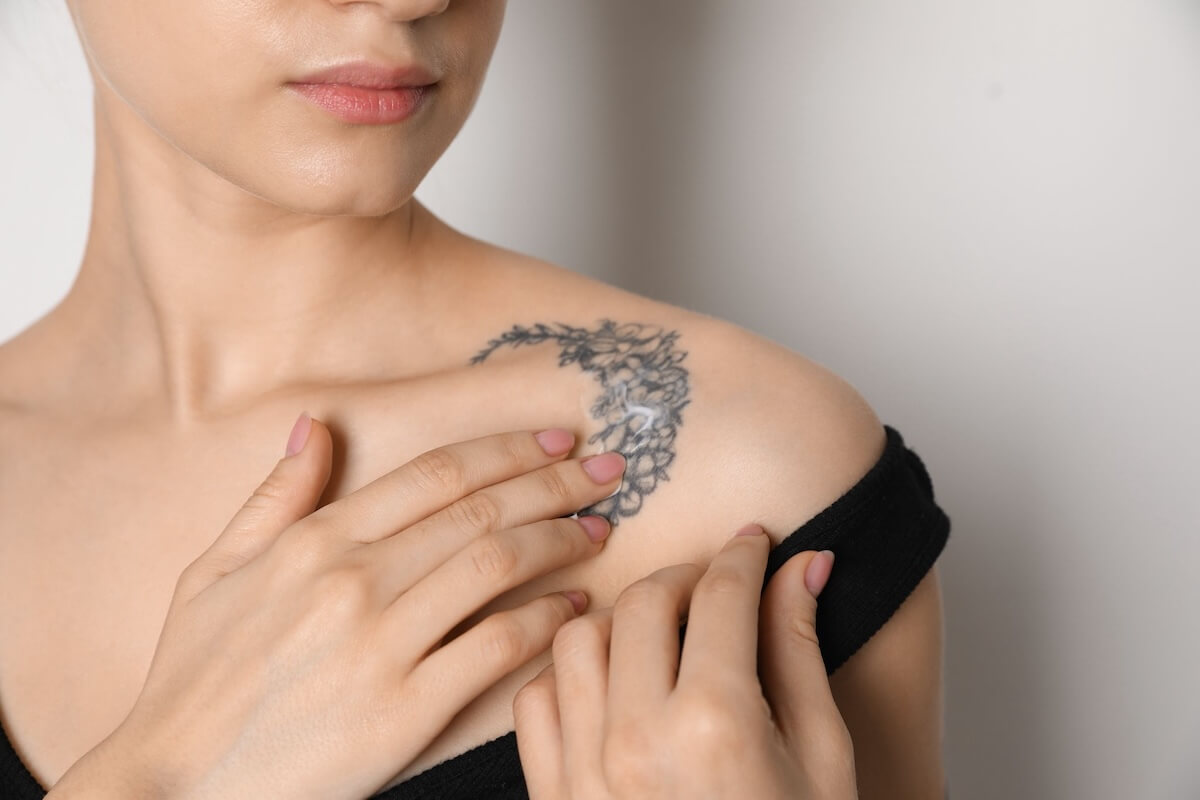
Thinking about replacing or updating a tattoo? If there’s an existing piece standing between you and the design you really want, laser tattoo reduction could be exactly what you need.
At Bare UK, we work closely with Oxford tattoo studio Inkora to offer a joined-up service for clients who want to modify or cover an existing tattoo. Together, we can help you fade what’s there, precisely and safely, so that your new artist has the best possible canvas to work with.
Whether you want a partial rework, or you’re simply ready to start fresh, here’s what you need to know.
Tattoo Removal vs. Tattoo Reduction: What’s the Difference?
We’re often asked about the difference between the two, so here’s a simple way to think about it:
Removal: complete elimination of the tattoo from the skin.
Reduction: targeted fading of part or all of an existing tattoo, creating the right conditions for new artwork to be placed over it.
Both are things we do well at Bare UK, and both require careful planning to get the best result.
Bare UK and Inkora: A Joined-Up Approach to Tattoo Transformation
Inkora is a high-end, art-focused tattoo studio in Oxford, and their approach to quality and client care aligns closely with our own. Together, we’ve developed a collaborative process that puts you at the centre, from the first laser session at Bare UK to the finished piece at Inkora.
The process works because we communicate closely. You tell us what you want to achieve, we discuss what’s possible, and Bare UK and Inkora work to a shared plan, so that every laser session is aligned with your eventual new design. Nothing is done in isolation.
What Affects How Long Laser Tattoo Removal Takes?
Every tattoo is different, and the number of sessions needed varies from person to person. During your consultation, we’ll talk through what to expect honestly and realistically. The key factors we consider are:
- Location on the body. Laser tattoo removal works by breaking down ink particles, which are then cleared by the lymphatic system. Areas with strong blood flow, such as the upper arms, chest, back, and upper legs, tend to respond more quickly. Tattoos on the hands, ankles, lower arms, and lower legs can take longer to fade as circulation is lower in those areas.
- The age of the tattoo. Over time, ink migrates deeper into the skin. This is why older tattoos often appear softer, bluer, and less defined. While this can make it harder for the laser to reach the ink precisely, older tattoos can still be treated effectively. We’ll factor this into your treatment plan from the start.
- Ink density. Fine-lined tattoos generally respond more quickly than heavy, saturated designs. Large areas of dense black ink, particularly solid block cover-ups, require more sessions to break down. If you’re considering a block cover-up tattoo as an alternative to removal, it’s worth speaking to us first. We’ll give you an honest view on whether that’s the most practical route for your situation.
- Skin tone. The laser targets contrast between the ink and the surrounding skin. On deeper skin tones, there is naturally more melanin present, which means we need to work with adjusted laser settings and longer intervals between sessions to treat safely. Tattoo removal is suitable for all skin tones; it simply requires a more tailored approach, and that’s something we’re experienced in managing.
All of this means that the timeline and number of sessions needed is unique to you and your tattoo. We’ll always give you a realistic picture at consultation, not an optimistic one.
Targeted Treatment: Working Around the Design
One of the things that makes this collaboration so effective is that laser treatment doesn’t have to be all-or-nothing.
Using careful masking techniques, we can target specific sections of a larger tattoo, fading only the areas that need to change while leaving the rest untouched. This means Inkora can place new artwork exactly where it’s needed, without requiring a full removal.
Before You Start: What to Know About Laser Tattoo Removal Aftercare
Laser tattoo removal is a process, not a quick fix, and we think it’s important you go into it with clear expectations. We always recommend speaking with Inkora about your end goal before your first session, so your treatment plan is built around the outcome you’re working towards. There are also a few practical things to bear in mind once you’re underway:
- Sun exposure. You’ll need to avoid UV exposure on the treatment area throughout your course of sessions. If you have a tan, we may need to wait until your skin has returned to its natural tone before we can safely treat. This is something worth planning around, particularly in summer.
- Massage between sessions. Once the skin has healed after each session, gently massaging the area daily can help support circulation and encourage your body to clear the broken-down ink particles more efficiently.
- Medications and aftercare. We’ll provide clear aftercare guidance after every session. It’s also important to let us know if anything changes medically, as certain medications can make the skin photosensitive and may mean we need to pause treatment temporarily.
None of this should feel overwhelming. We’ll walk you through everything before you start, and check in with you at every stage as we work towards your goal.
Ready to Start? Book a Consultation at Bare UK in Oxford
If you’re thinking about laser tattoo removal or reduction in Oxford, the best place to start is a consultation at Bare UK. We’ll take the time to understand what you’re hoping to achieve, assess your tattoo honestly, and outline a treatment plan that works for you, alongside Inkora where new artwork is part of the plan.

